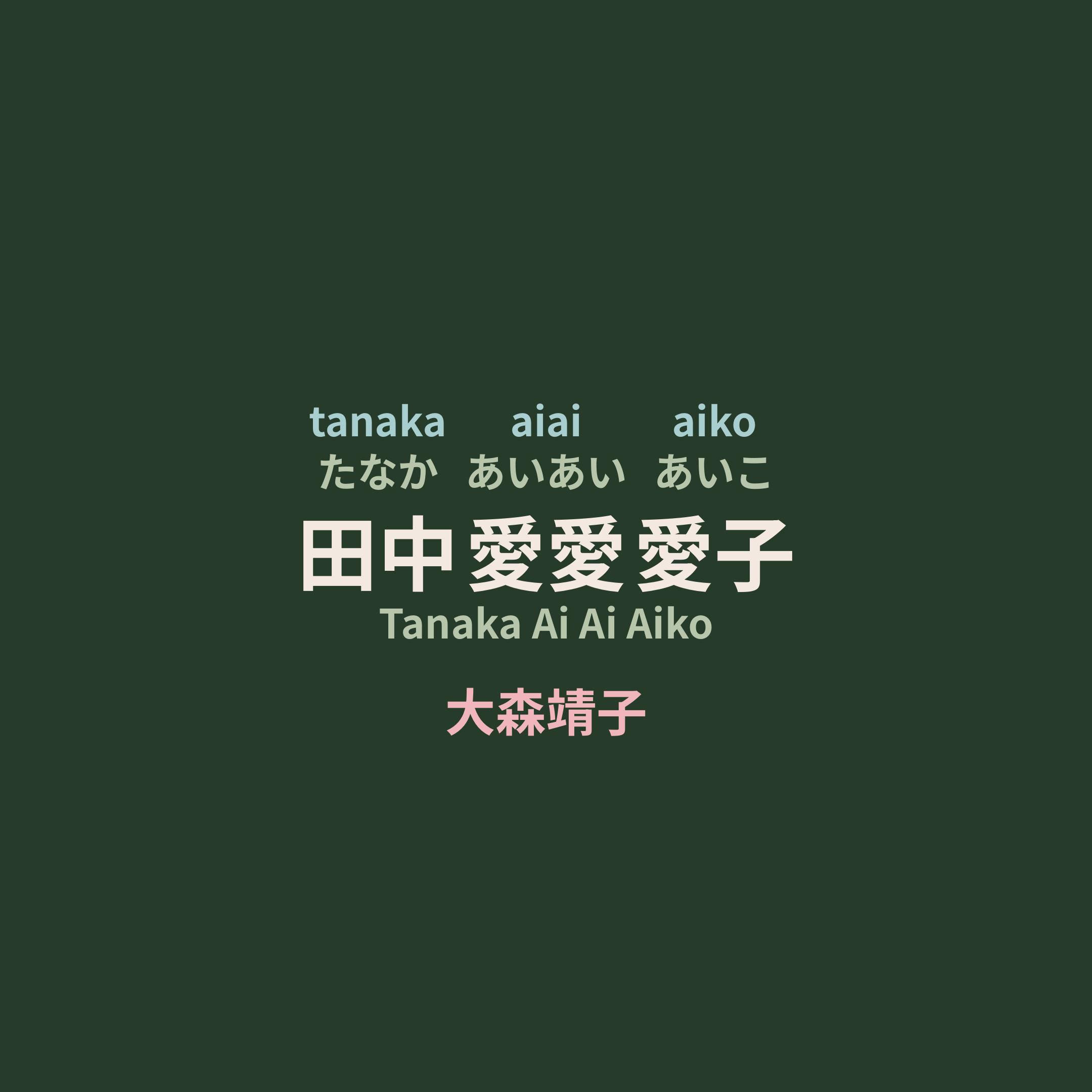
Tanaka Ai Ai Aiko ni naritai
田中愛愛愛子になりたい
I want to become Tanaka Ai Ai Aiko
- 田中愛愛愛子 /Tanaka Ai Ai Aiko/:the name-like title; the three 愛 sounds also echo the singer aiko and the English word 「I」
- なりたい /naritai/:want to become; from なる with the desiderative ~たい
dakedo ai ai ai amu hiroin janai
だけどアイアイアイアムヒロインじゃない
But I, I, I'm not the heroine
- だけど /dakedo/:but; however
- アイアイアイアム /ai ai ai amu/:a Japanese rendering of 「I, I, I'm」, punning on the sound of 愛 (English: I, I, I'm)
- ヒロイン /hiroin/:heroine (English: heroine)
- じゃない /janai/:is not; colloquial form of ではない
tokubetsu janakya
特別じゃなきゃ
If it isn't special
- 特別 /tokubetsu/:special; exceptional
- じゃなきゃ /janakya/:if it is not; colloquial contraction of じゃなければ
kakimidasenai
かき乱せない
I can't throw things into turmoil
- かき乱せない /kakimidasenai/:cannot disturb or throw into disorder; negative potential form of かき乱す
utsu nannakya
鬱なんなきゃ
If I don't become depressed
- 鬱 /utsu/:depression; gloom
- なんなきゃ /nannakya/:if one does not become; colloquial contraction of ならなきゃ
unmei janai
運命じゃない
Then it isn't destiny
- 運命 /unmei/:fate; destiny
- じゃない /janai/:is not; colloquial form of ではない
ai ai Aikosu iranai
アイアイアイコス いらない
Ai-ai-IQOS—I don't need it
- アイアイアイコス /ai ai Aikosu/:wordplay joining repeated アイ sounds to the heated-tobacco brand IQOS (trademark: IQOS)
- いらない /iranai/:do not need; negative form of いる, 「to need」
motto ai ai aisarenai riyuu wo futai shitai
もっと愛愛愛されない理由を付帯したい
I want to attach even more reasons why I can't be loved, loved, loved
- もっと /motto/:more; even more
- 愛されない /aisarenai/:not be loved; negative passive form of 愛する
- 理由 /riyuu/:reason; cause
- 付帯したい /futai shitai/:want to attach or append; from 付帯する
kemuri no naka aisareteru
煙の中 愛されてる?
Am I loved here in the smoke?
- 煙 /kemuri/:smoke
- 中 /naka/:inside; among
- 愛されてる /aisareteru/:being loved; contraction of 愛されている, the passive progressive of 愛する
watashi janai
私じゃない
It isn't me
- 私 /watashi/:I; me
- じゃない /janai/:is not; colloquial form of ではない
shouko wa
証拠は
The proof is—
- 証拠 /shouko/:evidence; proof
haibura sabukaru nante magyaku ga
ハイブラサブカルなんて真逆が
Polar opposites like high fashion and subculture
- ハイブラ /haibura/:short for ハイブランド, a high-end or luxury brand (English: high brand)
- サブカル /sabukaru/:short for サブカルチャー; subculture (English: subculture)
- なんて /nante/:things like; marks an example, often with dismissive or surprised nuance
- 真逆 /magyaku/:the exact opposite; polar opposite
echiechi shita mitai na uta
えちえちしたみたいな歌
A song as if they'd gotten naughty together
- えちえちした /echiechi shita/:got sexy or naughty; past form of えちえちする, based on internet slang
- みたいな /mitai na/:like; as though; seeming
- 歌 /uta/:song
ai ai ai ai
愛あいあい愛
Love, love, love, love
- 愛 /ai/:love
aishite
あいして
Love me
- あいして /aishite/:love me; the て-form of 愛する used as a request
motto yameba
もっと 病めば?
Why not get even more broken?
- もっと /motto/:more; even more
- 病めば /yameba/:if one becomes ill; conditional form of 病む, here suggesting 「why not…?」
motto shitte otona ni nattara
もっと 知って 大人になったら?
What if you learned more and grew up?
- 知って /shitte/:know; learn; て-form of 知る
- 大人 /otona/:adult; grown-up
- なったら /nattara/:if or when one becomes; たら-conditional of なる
dakedo seishun hiroo yume ni shisu
だけど 青春ヒーロー夢に死す
But the hero of youth dies in a dream
- だけど /dakedo/:but; however
- 青春 /seishun/:youth; adolescence
- ヒーロー /hiroo/:hero (English: hero)
- 夢 /yume/:dream
- 死す /shisu/:to die; a literary or archaic equivalent of 死ぬ
toumei bakka kawaii
透明ばっか かわいい?
Are only transparent, pure things cute?
- 透明 /toumei/:transparent; also evoking purity or untaintedness here
- ばっか /bakka/:nothing but; only; colloquial form of ばかり
- かわいい /kawaii/:cute; adorable
motto fukaku motto chitte
もっと 深く もっと 散って
Go deeper, scatter even more
- もっと /motto/:more; even more
- 深く /fukaku/:deeply; adverbial form of 深い
- 散って /chitte/:scatter; fall; て-form of 散る
dakara nani tte yuu
だから何ってゆう
And say, 「So what?」
- だから何 /dakara nani/:so what?
- って /tte/:colloquial quotation marker equivalent to と
- ゆう /yuu/:colloquial spelling of 言う; to say
datte watashi ga hoshii no wa
だって私が欲しいのは
Because what I want is
- だって /datte/:because; used here to give a reason
- 私 /watashi/:I; me
- 欲しい /hoshii/:wanted; desired
- ~のは /no wa/:nominalizes the preceding phrase and makes it the topic: 「what… is」
motto attouteki na hametsu na no
もっと圧倒的な破滅なの
A far more overwhelming ruin
- もっと /motto/:more; even more
- 圧倒的 /attouteki/:overwhelming; overpowering
- 破滅 /hametsu/:ruin; destruction; downfall
- なの /na no/:explanatory or emphatic ending, roughly 「it is…」
koroshite ageyokka
「殺してあげよっか?」
「Want me to kill you?」
- 殺して /koroshite/:kill; て-form of 殺す
- ~てあげる /te ageru/:do something for someone; creates a darkly ironic benefactive nuance with 「kill」
- よっか /yokka/:colloquial contraction of ようか, offering 「shall I…?」
oyasumi
おやすみ
Good night
- おやすみ /oyasumi/:good night; shortened form of おやすみなさい
sore wa aiai aiko ga utatteru
それはaiai aikoが歌ってる
That's what aiai aiko is singing
- それ /sore/:that; that thing
- 歌ってる /utatteru/:is singing; contraction of 歌っている, from 歌う
dakara ai ai ai amu hiroin janai
だからアイアイアイアムヒロインじゃない
So I, I, I'm not the heroine
- だから /dakara/:so; therefore
- アイアイアイアム /ai ai ai amu/:a Japanese rendering of 「I, I, I'm」, punning on 愛 (English: I, I, I'm)
- ヒロイン /hiroin/:heroine (English: heroine)
- じゃない /janai/:is not; colloquial form of ではない
naku no ga heta sakebisugite
泣くのが下手 叫びすぎて
I'm bad at crying and I scream too much
- 泣く /naku/:to cry; to weep
- ~のが下手 /no ga heta/:be poor at doing…; の nominalizes the verb
- 叫びすぎて /sakebisugite/:scream too much; 叫ぶ plus ~すぎる in the て-form
keisatsu toka yobarechau shi
警察とか呼ばれちゃうし
People end up calling the police on me, and all that
- 警察 /keisatsu/:police
- とか /toka/:things like; for example
- 呼ばれちゃう /yobarechau/:end up being called; contraction of 呼ばれてしまう, passive of 呼ぶ
- し /shi/:and; gives one among multiple reasons
shousoku fumei no koi wa naniiro datta no
消息不明の恋は何色だったの
What color was the love that went missing?
- 消息不明 /shousoku fumei/:missing; whereabouts unknown
- 恋 /koi/:romantic love
- 何色 /naniiro/:what color
- だったの /datta no/:was it…?; past of だ with explanatory or questioning の
shitakute yatteru uchi wa
したくてやってるうちは
As long as you're doing it simply because you want to
- したくて /shitakute/:wanting to do; て-form of したい, from する
- やってる /yatteru/:be doing; contraction of やっている, from やる
- うちは /uchi wa/:while; as long as a state continues
ai ai ai ai
愛あいあい愛
Love, love, love, love
- 愛 /ai/:love
ai janai
愛じゃない
It isn't love
- 愛 /ai/:love
- じゃない /janai/:is not; colloquial form of ではない
konton sekaijuu ga teki de
混沌 世界中が敵で
Chaos—the whole world is my enemy
- 混沌 /konton/:chaos; confusion
- 世界中 /sekaijuu/:the whole world; throughout the world
- 敵 /teki/:enemy; opponent
otona wa itai na
大人は痛いな
Being an adult hurts
- 大人 /otona/:adult; grown-up
- 痛い /itai/:painful; also embarrassing or cringeworthy in colloquial use
- な /na/:sentence-ending particle expressing reflection or feeling
kasurikizu tsuu ka chimeishou darake
かすり傷つーか致命傷だらけ
Not scratches so much as fatal wounds everywhere
- かすり傷 /kasurikizu/:graze; scratch; minor wound
- つーか /tsuu ka/:or rather; colloquial contraction of というか
- 致命傷 /chimeishou/:fatal wound; decisive blow
- だらけ /darake/:covered with; full of, usually something undesirable
zenzen itsumo yabakute
全然いつもやばくて
I'm always completely messed up
- 全然 /zenzen/:completely; at all, also used colloquially with affirmative expressions
- いつも /itsumo/:always; usually
- やばくて /yabakute/:awful; dangerous; intense; て-form of やばい
motto sekai motto tan ni
もっと 世界 もっと 単に
World, just a little more—more simply
- もっと /motto/:more; even more
- 世界 /sekai/:world
- 単に /tan ni/:simply; merely
watashi ni narete yo
私に慣れてよ
Get used to me
- 私 /watashi/:I; me
- 慣れて /narete/:get used to; て-form of 慣れる used here as a request
- よ /yo/:sentence-ending particle adding emphasis or urging
datte watashi ga hoshii no wa
だって私が欲しいのは
Because what I want is
- だって /datte/:because; used here to give a reason
- 私 /watashi/:I; me
- 欲しい /hoshii/:wanted; desired
- ~のは /no wa/:nominalizes the preceding phrase and makes it the topic
motto attouteki na owari na no
もっと圧倒的な終わりなの
A far more overwhelming ending
- もっと /motto/:more; even more
- 圧倒的 /attouteki/:overwhelming; overpowering
- 終わり /owari/:end; ending
- なの /na no/:explanatory or emphatic ending
oto mo hikari mo nai
音も光もない
There is neither sound nor light
- 音 /oto/:sound
- 光 /hikari/:light; radiance
- ~も~もない /mo mo nai/:neither… nor…; no… and no…
dokidoki
ドキドキ
My heart pounds
motto yameba
もっと 病めば?
Why not get even more broken?
- もっと /motto/:more; even more
- 病めば /yameba/:if one becomes ill; conditional form of 病む, here suggesting 「why not…?」
motto shitte otona ni nattara
もっと 知って 大人になったら?
What if you learned more and grew up?
- 知って /shitte/:know; learn; て-form of 知る
- 大人 /otona/:adult; grown-up
- なったら /nattara/:if or when one becomes; たら-conditional of なる
dakedo sabukaru hiroo yume ni shisu
だけど サブカルヒーロー夢に死す
But the subculture hero dies in a dream
- だけど /dakedo/:but; however
- サブカル /sabukaru/:short for サブカルチャー; subculture (English: subculture)
- ヒーロー /hiroo/:hero (English: hero)
- 夢 /yume/:dream
- 死す /shisu/:to die; a literary or archaic equivalent of 死ぬ
warau tenshi bakka kawaii
笑う天使ばっか かわいい?
Are only smiling angels cute?
- 笑う /warau/:to laugh; to smile
- 天使 /tenshi/:angel
- ばっか /bakka/:nothing but; only; colloquial form of ばかり
- かわいい /kawaii/:cute; adorable
motto fukaku motto chitte
もっと 深く もっと 散って
Go deeper, scatter even more
- もっと /motto/:more; even more
- 深く /fukaku/:deeply; adverbial form of 深い
- 散って /chitte/:scatter; fall; て-form of 散る
dakara nani tte yuu
だから何ってゆう
And say, 「So what?」
- だから何 /dakara nani/:so what?
- って /tte/:colloquial quotation marker equivalent to と
- ゆう /yuu/:colloquial spelling of 言う; to say
datte watashi ga hoshii no wa
だって私が欲しいのは
Because what I want is
- だって /datte/:because; used here to give a reason
- 私 /watashi/:I; me
- 欲しい /hoshii/:wanted; desired
- ~のは /no wa/:nominalizes the preceding phrase and makes it the topic
motto attouteki na hametsu na no
もっと圧倒的な破滅なの
A far more overwhelming ruin
- もっと /motto/:more; even more
- 圧倒的 /attouteki/:overwhelming; overpowering
- 破滅 /hametsu/:ruin; destruction; downfall
- なの /na no/:explanatory or emphatic ending
koroshite ageyokka
「殺してあげよっか?」
「Want me to kill you?」
- 殺して /koroshite/:kill; て-form of 殺す
- ~てあげる /te ageru/:do something for someone; creates a darkly ironic benefactive nuance with 「kill」
- よっか /yokka/:colloquial contraction of ようか, offering 「shall I…?」
oyasumi
おやすみ
Good night
- おやすみ /oyasumi/:good night; shortened form of おやすみなさい