Instrumental
ojisan ga tateta biru nuida pin hiiru
おじさんが建てたビル 脱いだピンヒール
A building put up by an older man, discarded stiletto heels
- おじさん /ojisan/:uncle; an older or middle-aged man
- 建てた /tateta/:built; past form of 建てる, modifying ビル
- ビル /biru/:building (from English: building)
- 脱いだ /nuida/:took off; past form of 脱ぐ
- ピンヒール /pin hiiru/:stiletto heel (from English: pin heel)
wakamono ga tobioriru biru hitori futari yoru wa itsumo doori
若者が飛び降りるビル ひとりふたり 夜はいつも通り
A building young people jump from, one and then another; the night goes on as usual
- 若者 /wakamono/:young person; young people
- 飛び降りる /tobioriru/:to jump down; formed from 飛ぶ and 降りる
- ひとりふたり /hitori futari/:one person, two people; here suggesting one after another
- 夜 /yoru/:night
- いつも通り /itsumo doori/:as usual; ~通り means in accordance with or just like
ikiru tame no jeru neiru tekubi wa shinde iru
生きるためのジェルネイル 手首は死んでいる
Gel nails to keep living, while the wrists are dead
- 生きる /ikiru/:to live; to survive
- ため /tame/:for the purpose of; verb dictionary form + ため expresses purpose
- ジェルネイル /jeru neiru/:gel nails (from English: gel nails)
- 手首 /tekubi/:wrist; contrasted here with the decorative nails
- 死んでいる /shinde iru/:is dead; from 死ぬ, with ~ている marking a continuing state
mujihi ni nomikomu piru hitotsu futatsu kyou mo romantikku doori
無慈悲に飲み込むピル ひとつふたつ 今日もロマンティック通り
Mercilessly swallowing pills, one and then two; romantic as ever today
- 無慈悲 /mujihi/:merciless; 無慈悲に means mercilessly
- 飲み込む /nomikomu/:to swallow; also figuratively, to grasp or hold back words
- ピル /piru/:pill; sometimes specifically a contraceptive pill (English: pill)
- ひとつふたつ /hitotsu futatsu/:one, two; native Japanese counting words
- 今日 /kyou/:today
- ロマンティック /romantikku/:romantic (from English: romantic)
- 通り /doori/:just as; here it links romantic with as usual, creating an ironic tone
eien wa iranai ima wo mitsumetete yo
永遠はいらない 今を見つめててよ
I do not need eternity; just keep your eyes on the present
- 永遠 /eien/:eternity; forever
- いらない /iranai/:do not need; negative form of いる meaning to need
- 今 /ima/:now; the present moment
- 見つめてて /mitsumetete/:keep looking intently; contraction of 見つめていて, from 見つめる
boku ga boku ni tateta naka no yubi ga piisu ni naru
僕が僕に立てた中の指がピースになる
The middle finger I raised at myself turns into a peace sign
- 僕 /boku/:I; a usually masculine or boyish first-person pronoun
- 立てた /tateta/:raised; past form of 立てる, here referring to a finger
- 中の指 /naka no yubi/:the finger in the middle, meaning the middle finger; an insulting gesture here
- ピース /piisu/:peace; also the two-finger peace or victory sign (English: peace)
- ~になる /ni naru/:to become; to turn into
wagamama de ii kana kon'ya dake wa yurushite hodoite yurushite toketeku
わがままでいいかな?今夜だけは 赦して ほどいて 赦して とけてく
May I be selfish? Just for tonight, forgive me, undo me, forgive me, as I melt away
- わがまま /wagamama/:selfishness; selfish or willful
- ~でいいかな /de ii kana/:would it be okay to be...; かな expresses wondering or uncertainty
- 今夜 /kon'ya/:tonight
- だけは /dake wa/:at least; just this one, with emphasis on a limited scope
- 赦して /yurushite/:forgive me; te-form of 赦す, with a strong sense of pardoning
- ほどいて /hodoite/:undo or untie me; te-form of ほどく
- とけてく /toketeku/:melt or dissolve away; contraction of とけていく
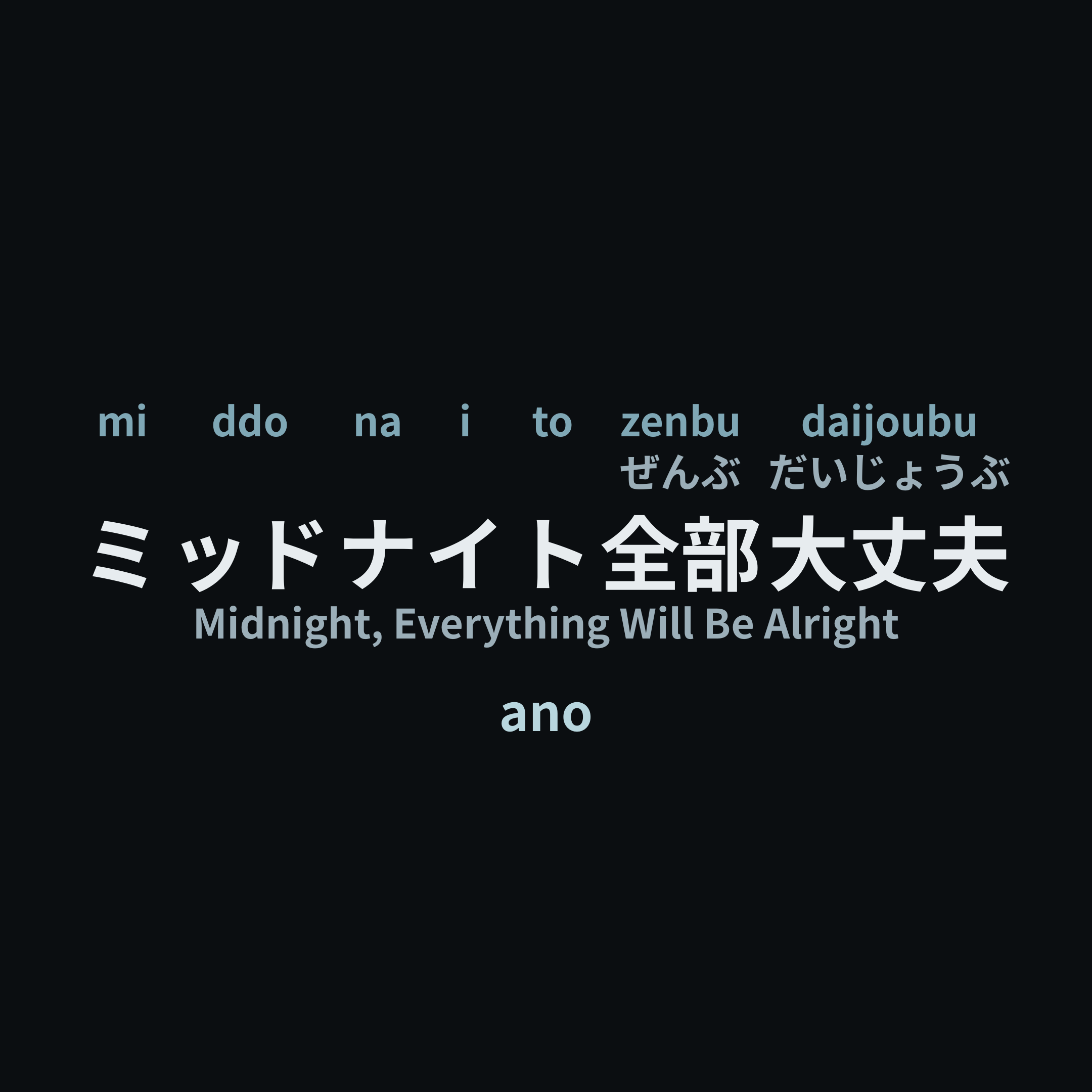
middonaito maboroshi datte itsuka wa tokeru hazu da wa
ミッドナイト まぼろしだって いつかはとけるはずだわ
Midnight—even an illusion is bound to dissolve someday
- ミッドナイト /middonaito/:midnight (from English: midnight)
- まぼろし /maboroshi/:illusion; phantom
- だって /datte/:even; marks an emphatic example
- いつか /itsuka/:someday
- とける /tokeru/:to melt, dissolve, or come undone; the hiragana spelling allows several nuances
- はずだ /hazu da/:should; is expected or bound to
kowareru gurai dakishimete
壊れるぐらい 抱きしめて
Hold me so tightly I could break
- 壊れる /kowareru/:to break; to be broken, an intransitive verb
- ぐらい /gurai/:to the extent that; enough to
- 抱きしめて /dakishimete/:hold me tight; te-form of 抱きしめる
noroi wo kakete okure yo
呪いをかけておくれよ
Please cast a curse on me
- 呪い /noroi/:curse
- 呪いをかける /noroi wo kakeru/:to cast a curse; ~をかける means to apply or place something on a target
- ~ておくれ /te okure/:please do... for me; an old-fashioned or pleading equivalent of ~てくれ
hatarakedo girigiri seikatsu kuchiguse wa shine iya da
働けどギリギリ生活 口癖は「死ね」「嫌だ」
Though I work, I barely scrape by; my stock phrases are 「Drop dead」 and 「I hate this」
- 働けど /hatarakedo/:though I work; from 働く, using the literary concessive pattern realis form + ど
- ギリギリ /girigiri/:barely; right at the limit, here describing scraping by
- 生活 /seikatsu/:life; daily living, here a barely sustainable life
- 口癖 /kuchiguse/:habitual saying; stock phrase
- 死ね /shine/:drop dead; a very harsh imperative form of 死ぬ
- 嫌だ /iya da/:I hate it; I do not want to; expresses dislike or refusal
kaiwa darui shiranai papa hitori futari kawaii baggu koushin
会話だるい知らないパパ ひとりふたり かわいいバッグ更新
Tiresome chats with strange sugar daddies, one and then another; another cute bag upgrade
- 会話 /kaiwa/:conversation
- だるい /darui/:tiring; bothersome; a drag
- 知らない /shiranai/:unknown; unfamiliar; negative form of 知る
- パパ /papa/:dad (from English: papa); in this context it can imply an older man providing money or gifts for companionship
- かわいい /kawaii/:cute; pretty
- バッグ /baggu/:bag; handbag (from English: bag)
- 更新 /koushin/:update; renewal; here it implies upgrading to a new bag
nee tsukaimichi nai namida wo dareka sukutte yo
ねぇ使い道ない涙を誰か掬ってよ
Someone, please scoop up these tears that have nowhere to go
- 使い道 /tsukaimichi/:use; purpose; 使い道ない涙 colloquially omits の from 使い道のない涙, meaning tears with no use
- 涙 /namida/:tears
- 誰か /dareka/:someone; somebody
- 掬って /sukutte/:scoop or cup up; te-form of 掬う, also evoking the homophone 救う, to save
ano hi tabesokoneta ai ga ima torokedasu
あの日食べ損ねた愛が今とろけだす
The love I missed out on tasting that day begins to melt now
- あの日 /ano hi/:that day
- 食べ損ねた /tabesokoneta/:failed or missed the chance to eat; from 食べ損ねる, where verb stem + 損ねる means failing or missing the chance to do something
- 愛 /ai/:love; pictured here as something that can be eaten and melted
- 今 /ima/:now
- とろけだす /torokedasu/:to begin melting; とろける plus ~だす, which marks the start of an action
bakemono de ii kana konna demo yurushite yurushite yurushite toketeku
化け物でいいかな?こんなでも 赦して 赦して 赦して とけてく
Is it okay if I am a monster? Even like this, forgive me, forgive me, forgive me, as I melt away
- 化け物 /bakemono/:monster; supernatural creature; figuratively, a frightening or extraordinary person
- ~でいいかな /de ii kana/:is it okay to be...; a tentative question to oneself or another person
- こんなでも /konna demo/:even like this; the implied noun, such as me, is omitted
- 赦して /yurushite/:forgive me; te-form of 赦す, repeated to intensify the plea
- とけてく /toketeku/:melt or dissolve away; contraction of とけていく
doushiyo mo nai toki ni wa ima dake nigedashite sa daijoubu daijoubu daijoubu sa
どうしよもない時には 今だけ逃げ出してさ 大丈夫 大丈夫 大丈夫さ
When nothing can be done, run away just for now; it is okay, it is okay, you will be okay
- どうしよもない /doushiyo mo nai/:hopeless; nothing can be done; a colloquial or sung contraction of どうしようもない
- 時には /toki ni wa/:when; in times when, with には highlighting the situation
- 今だけ /ima dake/:just for now; only at this moment
- 逃げ出して /nigedashite/:run away; te-form of 逃げ出す, conveying breaking away or starting to flee
- 大丈夫 /daijoubu/:all right; okay; things will be fine
middonaito maboroshi datte itsuka wa tokeru hazu da wa
ミッドナイト まぼろしだっていつかはとけるはずだわ
Midnight—even an illusion is bound to dissolve someday
- ミッドナイト /middonaito/:midnight (from English: midnight)
- まぼろし /maboroshi/:illusion; phantom
- だって /datte/:even; marks an emphatic example
- いつか /itsuka/:someday
- とける /tokeru/:to melt, dissolve, or come undone
- はずだ /hazu da/:should; is expected or bound to
dakishimete kowareru gurai
抱きしめて 壊れるぐらい
Hold me, tightly enough that I could break
- 抱きしめて /dakishimete/:hold me tight; te-form of 抱きしめる
- 壊れる /kowareru/:to break; to be broken, an intransitive verb
- ぐらい /gurai/:to the extent that; enough to
noroi wo kakete okure yo
呪いをかけておくれよ
Please cast a curse on me
- 呪い /noroi/:curse
- 呪いをかける /noroi wo kakeru/:to cast a curse; ~をかける means to apply or place something on a target
- ~ておくれ /te okure/:please do... for me; an old-fashioned or pleading equivalent of ~てくれ
Instrumental
daijoubu
大丈夫
It is all right
- 大丈夫 /daijoubu/:all right; okay; often used to reassure someone